Saturday, January 29, 2022

Everesting on Wes White


Wes White Hill from the bottom

In April of 2021, after two failed attempts, I completed an “Everesting” attempt. I got a lot of questions and while the Pareto chart says the number one question was “Why?”, here are a few of the others answered in a summary.  First of of all, why not?


I have held fast this past year to consistent efforts while racing is on hold. In a way, I don’t really miss racing, but I do miss the people I race with. That aside, efforts like these are what to do now as you don’t have a ton of commitments while things are getting restarted soon. But, take a step back. What is Everesting?  It is where you climb the equivalent of the height of Mt Everest in one ride: 29031 feet of ascent.  The first consideration is of course, the route. It has to be a single repeated climb per the rules. I toyed with a few locals: App Gap, Smugglers Notch from the Jeffersonville side, Bolton Valley Access, Mt Philo, and a few others. I think we all know, Philo was out fast: too many people.  Then I considered my emotional favorite: App Gap. But looking at the numbers and the length, it was going to be challenging and I worried about the technical descents on both sides.  Looking at the VAM (Italian for Meters climbed/hour) I was calculating a long time in the saddle coupled with a tech descent that could be dangerous when tired. Let’s not even talk about the potholes. Smuggs seemed good, and I had data there and at Bolton from the GMBC TTs. But Smuggs was too gentle on the easy descent Jeff side, and the descent to Stowe with tourists was too dangerous.  Bolton was again, a decent option, but road conditions were a little crazy.

Ultimately, I landed on a road which drew my attention due to its myriad of descriptions using words like “@&£%” and “f&&^#!”  That road was Wes White Hill Rd in Richmond. This road averages 10% for one mile, is completely paved, has a brakes off 55mph descent, and kinda goes nowhere except if you know where it goes.  Calculations said that the ride would require 60-70 laps depending on where you started. Yes. 60-70 laps. Many comment on how that would be too repetitious and boring. But skipping to the end here: Everesting is so hard, it doesn’t matter where you are. You won’t notice after you get halfway there. So there it was. Road selected. 

The equipment 
Initially, in attempt 1,  I thought it was all about gearing. I brought my gravel setup Specialized Crux with a 36-36. The bike had 38 Challenge Strade Bianca slicks on it pumped to 50 psi. As a backup, I brought my Kona King Kahuna hardtail with Challenge Gravel Grinder semi-slicks and a 36-42. I thought that the MTB could be a late game sub if it got too hard. But, the tires on the MTB provided enough drag that when I subbed it in, it provided little gain. Drag outweighed the mechanical advantage. 

The successful attempt was a traditional climbing bike. A Specialized  Tarmac SL6 with Next 45s, Specialized Turbo tires at 90 psi and a 34-32. (I could not find a 34 cassette, the max allowed for a Di2 Med cage). This thing was it. It descended fast and stable, and climbed super fast. 

Helping out on this was my Wahoo ELEMNT Bolt which tracked elevation and VAM so I could see how I was proceeding. More on this later. 

Prep
First of all, be fit. Yeah, that’s a nebulous statement, but it means you can’t do this cold, with no fitness, but at the same time, there is no way to duplicate the effort to get ready. Know how to ride 100 miles. And know how to mentallly stay in the game. I went into this with a very consistent winter of 10-14h training weeks. Not too killer on volume. I did core work, and rode a lot of tempo and aerobic efforts. I also raced on Zwift once/week with my BMB teammates to keep the top end tuned. But by the book, in April, I didn’t have a history of 10+ hour efforts. But, I did have TrainingPeaks. I’ve been using that for a long time and I have been coaching folks using the Fatigue/Fitness/Freshness metrics. Over the pandemic year of 2020 I was able to build a bigger base than ever, take a break in October and arrive in April with a fitness value of 30% greater than previous years. Knowing this non-dimensional value relative to times in-season when I had that value, I knew I could hold a reasonable part of the effort. With the exception of a few years, my fitness was at a level mostly seen in June. It would be a stretch effort still, but not a ridiculous “marathon off the couch” by any means. 

I was riding without a power meter on this trip because my climbing wheels did not have a powertap. So, I spent a few sessions on Zwift dialing in the correct heart rate for a mid-tempo effort.  This would be key for pacing early, but I also knew that after a while, it wouldn’t matter and grit and determination would take over. 

The plan
First of all was the route. That was done. Second of all was fitting a full day in for the family schedule. Third, there was the weather. Previous attempts started in weather that was too cold. Descending was frigid and then you would climb and sweat only adding to the descending frigidity. I had three days as possibilities. This would allow me to flex based on the weather, family commitments, and pick an ideal day. Good plan because Day 1 it snowed. And it was one of those snows where IT SNOWED!  Sugarbush got 10+ inches in 6 hrs!  Day 2 the precip was hanging over so Day 3 was a go. Temps were forecast to be 38F at the start climbing to about 50.  Slight chance of rain was the risk.  However, I would say ideal weather would be 50-70F and dry. 

For food, I got up early and kinda broke the rules and had some oatmeal which I have been doing lately. In the past I’ve steered  away from eating that much fiber. But, it’s been doing ok on training, so....  I also had an absolute minimum of coffee. One 8oz cup right when I got up to avoid a headache. First attempt I drank way too much coffee in the AM and I got behind on hydration and it ended poorly. The plan was to drink one 20oz bottle on average and eat one Untapped per 30 min. I brought the old standard plain, and a handful of salted cocoa. Oh my, so good. I also love those GoGo Squeeze applesauces on long rides and threw those in for a change every few hours.  I did not include any coffee or caffeine infused untapped during the ride. This was purely an aerobic effort and the caffeine would have negative hydration effects late in the game. This is also what happened on a failed attempt previously. So that was the plan. I loaded up the bike, made two gallons of Ginger Mapleaid in the new Coleman drink cooler and headed off.  Knowing how to be kind to your stomach pays off in spades. You can train to match the effort, but if your stomach isn’t prepped for this effort by staying with friendly foods, there is no way to correct for that during the ride.  For Christmas, I had asked for a Coleman drink cooler as a gift.  For this ride and others, I filled it up with Untapped Ginger Mapleaid, and I could roll up and fill a bottle in seconds.  Like 5 seconds.  This was super helpful and made cleanup easy.  I didn't have to make and wash 12 bottles.  Just two.


The Go 
I drove to Wes White and parked at the top. There is a little dirt turnaround up there I think for plows or buses. This is way more low key than the one at the bottom where there are four spots that river visitors fight over. That’s your pro tip there. I had my truck with the tonneau on so I put all the food in there and could just drop the tailgate and grab/fill a bottle and grab some untapped. I brought two bottles to fill and rotate through, but never carried more than one because the loop was so short. I carried four untappeds or 2 hours worth max.  I pushed off at 6:18. 

Now I had a friend Chris who super pumped to be a part of this. I told him I was shooting for a 6 am start which meant I would be probably starting at 6:15. So, I said don’t show up until 6:15. He texted me he was at the base and ready at 5:55.  This part of the attempt was the unexpected gift. I started with him doing the first four laps. It was great to be slightly diverted from the ominous task with a few chats. Throughout the day I had many many people stop by, and ride a few laps with me. It was great.  Some friends captured photos of me smiling...


The kit: helmet with buff, thermal jersey, lightweight jersey, SS jersey, baselayer, shorts, leg-warmers, oversocks, lightweight full-finger gloves

As I rode the early part, it was not 38, it was 32F.  Then, after Chris left at lap 5 an hour in, it started to gently mist. This was not welcome. It lasted a few laps, but let up. I adjusted my descent speed accordingly so as not to slip. There was a lot of dust on the road from the snow three days before and that was concerning. As I worked through the first few hours, I began looking at the feet accumulated and started doing the 1/10th there, 1/7th...1/6th math game. I really enjoyed watching the denominator click down, and by noon, it was 1/2.   

About two hours in I peed and it was really clear so I backed off a touch on fluids to prevent overhydrating. From then on, I tried to roughly drink one bottle an hour but the weather and my sweat rate didn’t really require it. I was still sweating, had no goosebumps (my initial sign of dehydration) and was peeing regularly and the color was right. This was one of the first efforts where it was so long, you could make this type of adjustment. 

At about 10, it had warmed a little and I took off my outer cold weather jersey. I had been starting to zip it up and down making sure I was cool on ascents and warm on the descents. I also tried to take off my buff which I was wearing as a hat. That quickly went back on after one descent where my bald head was still freezing. The buff stayed on a few more hours, but I now continued with a thin LS jersey over a short sleeve and a baselayer, along with shorts and thin legwarmers.  The legwarmers really worked well and it wasn’t until very deep that I toyed with taking them off, but was worried about cramps.  The temp maxed out at 61 so it never was really an issue with the legwarmers. I often get cramps in my hip flexors and hamstrings trying to remove kit after a long event. I wanted no part of that. 

Using data from the two previous attempts, my average VAM was predicting a ride time of 11:06.  So the plan was to definitely hit halfway by noon, 20k by 2, and 25k by 4. I cleared the first by 15 mins, the second by 20, and hit the fourth right on target. These were the only real marks I made for myself this attempt. In the first attempt, I would track a single lap every hour or two. Watching this number fall on a micro scale did not do wonders for my psyche. This time, with a predicted time, a pace, a HR marker, and these three simple marks, I was able to just ride along and track ascent and watch it pile up. 

Around noon, Jason arrived halfway up the climb with a musette  bag of treats. He handed over some M&Ms and they were amazing. He ran along side, then drove next to me like a pro DS, and then hung out at the top for one more lap. Another thing I concentrated on was not resting too long at all. I grabbed a bottle, and went. When folks arrived, I chatted quickly, and then said “I gotta keep going!”  This kept me on target. It got dark shortly after 7 so I did not have a ton of leeway.  One funny thing was Jason dropped one M&M at the steepest part of the climb and it sat there taunting me for the rest of the ride. Perched on the shoulder looking at me like “go? Or grab me? You make the choice” with a cackle. Shortly after this, the untapped genies, George and Aliza stopped by the truck and left a lemon waffle and one of each flavor untapped. So good. 


Then, as I ticked through 20K I had a pair of friends Jason and Eric arrive for a few laps. Then later, as I went through 24K Charles arrived and Alan for a half lap. Each time someone left and I was alone, it was like watching someone leave after a weekend knowing you would never see them again. When Charles left, I knew I was in for the long lonely finish. I was holding pace, but the legs were getting tired. I had to stand a little more. At the steepest part of the climb, I was in the 34-32, and not coming out of it as soon as I was earlier. 

From this point on, I had weathered some clouds coming in and a threat of rain, but it cleared and the sun began to really shine. I got past 27K and one of the residents working in his yard stopped his tractor and yelled “YOU ARE A SAVAGE”!!! From this point on I knew I was going to finish. I had ridden the route 50+ times. I knew the lines down. I was riding no brakes descents topping out at 50+ mph. Once you get into the 28Ks the feet come slowly and they come hard. My knees started to complain. My back was getting tight. The chafing started to bite. It was hard. 

And then, shortly after 5:45, I rounded the corner at the steepest part and just after the guard rail and that blue M&M, I saw the clock tick 29,000 I watched it religiously to see if I could stop right at 29031. I tried, but it read 29033. I took a photo, and I was done. 


I was thankful this was right where the grade eased and I had earlier been shifting out of the 32. I rode slowly to the top, stopped the clock, and rested.  So often this is where the pain starts. Your entire body cramps in the strangest places as you just try to put your leg over, or try to remove kit. 

The after 
As I said, I took my time. I changed clothes minus the shorts, and put on some dry LS baselayers and my favorite fleece. Yes I broke a rule and didn’t change shorts immediately but I knew that trying to change out of the shorts in the back seat of my car would cramp me to bits. But no joke, I was tired. George popped over from his house with two beers, offering me a celebratory drink. Man I wanted a beer. But then I’d probably fall asleep on the way home. I took a raincheck. 

As the evening wore on, the knees became sore. All that load at low revs added up. The next day I went for a swim and this did wonders. It loosened up the muscles and allowed the knees some motion and they felt much much better.  I did a short ride on the neighborhood trails for a half hour and I could tell I was smashed from the skin to the very center of my bones. I took it easy for a few days and the body turned around. 

Being this smashed afterward was not surprising.  This effort was extremely difficult.  I have ridden 150+miles on the road four times.  During those efforts, you have undulation and can coast.  The flat sections are relatively easy.  But in this effort, 50% of the 107miles was UP.  And it was up at 10% average with a steeper pitch in the middle.  There is no way to suffer through this and fake it.  Everything has to align, and when it doesn't, your body lets you know, as I found out in my first attempt where I got to 23,600 ft and 94 miles and my body just started refusing to take in fluids and I had to stop.


This was a great effort. I enjoyed ticking this off, but I bid these solitary efforts adieu now. Vaccinated, I’m ready to race. 

Friday, July 17, 2020

Pandemic Racing...on Strava


In the spring, every 5 days or so, the listserv would light up with “What is going to happen with racing this summer?”  People bare their souls about the disappointment of missing a spring race they were so pumped for. Others weigh in with not so expert opinions on how the world for us will change to hill climbs and ITTs. Rather than wait for the race, practice bringing it to you...with Strava. 

I did this last fall, and it is totally applicable now.  I picked a Strava segment I was close to getting, or where I was close to a breakthrough. I adjusted training on a micro cycle level, and picked a day to go after it. Normally, I would be out on a ride and go after the segment. But in this case, I drove to the spot like I was driving to Look Park in Northampton. I picked a start time to mimic the time discipline of a real race.  I fueled and hydrated. I parked and setup my Feedback Sports Omnium trainer. I got the race wheels out and pumped them up to the right pressure. I got the race kit on, and began the warmup. I have a pretty basic warmup that is 15-20 min long. I spin, I ride a little tempo, I do some 30 second efforts at VO2, a 5 minute near threshold piece, and then a short spin. 

Up until this point, this exercise is a great way to test out your warmup without having to pin on a number and wait in line to get it. You can refine and double check your packing list. If you miss your self designated start time, ask why, and evaluate. Because Look Park is going to open at some point, and you need to be ready. 

So right now in the process, you are in race mode. You have been missing this, and here is a barometer. Hit the race line with focus. Know the pace and power you need to hold.      Get after it, just like it is race day...but you are alone. 

Now at this point some reading this are rolling their eyes. “Strava KOMs...ugh.”  But while it is easy to wave a dismissive hand in Strava’s direction, it is a solid measure of performance that can’t be duplicated.  Concrete barriers and goals are what most effectively drives us.  Push yourself to the finish and then evaluate the result. Did you get a PR?  Did you sustain power/pace/HR? Determine either yourself or with your coach where there were gains and where there were gaps. 

There is no doubt that we all like racing. While it is currently in a different form, Strava allows us a good benchmark to apply some structure. And have some fun. Challenge friends, pick a few long segments and make a stage race on total time. Or even, some of these variations:

The road race: pick two segments on a 2 hour ride, one in the middle and one at the end. Simulate getting into the break and going hard for the finish 

The repeat: do a segment that is in a short loop multiple times and see how you gain or fade 

The Cat 5: start your ride with little or no warmup and go for a segment out of the gate. Then ride a loop and do it again.

The practice TT: don’t be shy, put on all the TT gear (wheels, skinsuit, helmet etc) and do the local Thursday Night TT course. Who cares if someone is like “What??” when they see you. It’s the pandemic. How else are you going to ride that Shiv with a solid disc?


Again, these efforts will give you a goal and a benchmark.  They will add some spice and fun to your training, and even if for a brief few hours, your body may feel like it’s Labor Day in the BTV and the crit is coming up. 

Monday, May 18, 2020

Adjusted Expectations

Every vacation, a part of me sets up this plan, to attack a weakness. Because of logistics, it’s usually a run camp. Our family regularly heads south for Feb and April vacation and I develop this elaborate run surge in the warm weather. I won’t be working, I tell myself, I can get the miles in. Sound familiar?  You think that you can just show up in a new place, and disappear for long runs. But inevitably, it’s vacation and the will of the people, and the purpose of the vacation in the first place—to relax—throw a wrench in the plan. Such is life. 

Now taking a break on vacation and actually relaxing, is a really good thing. It’s something we as Americans don’t do enough of some say. There are a myriad of reasons for that. But, it always seems like “run camp” fits with relaxation. I have tried this many times over the past 10 years, with  less than 50% total success rate. And when it isn’t successful, you can come home feeling guilty and sensing you squandered something. 

But, let’s put this in perspective.  One of the good things about some vacations is the unstructured time. A little extra rest, and a chance for the body to absorb training and adapt. Running, biking, and swimming are in your blood though, and not doing anything is usually not your favorite. 

After years of trying to surge on vacation, this year I tried to set the time up as an active recovery week with shorter runs to feel like I did some work, but a lot of flexibility to actually relax. Instead of using the week to build to a long run for the season, I ran short, 2 miles, and did more strides and a short core set. Done in a half an hour before the family even knew if it was sunny or cloudy.  Since I normally run 4 days a week, running 7 days in a row was a mini surge in itself. Expectations were lower, and the stress of fitting it all in were also lower.  

I ran in the morning some days, and in the afternoon on others. It all depended on how it fit. One or two days, I went a little longer. Another bonus, when you only need to go a mile or two down the road, you can easily find a route. In this particular vacation, I found I could run well over two miles either way...on the beach!!!  Bonus: I found a washed up 80s Russian rocket piece!

So, when planning a vacation, set the expectations right: relaxation, family, training. Realize it’s a new place as finding elaborate routes may be hard. Reduce distance, and absorb training. Relax and explore the new place with your family. After all, it’s a vacation. 

Postscript:
I wrote this in late February after a trip to Belize. Then, COVID-19 hit the US and things changed. However, I feel that this perspective applies now, and in the future as things open up. Maybe as restrictions lift, you feel more comfortable getting out and can adjust expectations. Don’t try to ramp up immediately or feel the need to catch up on missed training. Just get out and do something that feels good. During these past few months, one of my most pleasant surprises was the “one minute of core” idea. After each ride, I did one minute of either crunches, planks, inverted leg lifts, anything. A week in, things got into a rhythm and it was evident it was working. I followed Leah Kirchmann on IG and she had daily stories of what she was doing for one minute of core.  So, in the past few months, I’ve had pleasant surprises in the time of overall darkness that I will carry with me...forever. #danforthfamilyfitness

Monday, April 22, 2019

The Mantra

When I started to really race and move up in category, I got totally into it. I wanted to race all the time. I wanted to get podiums and wins.  I worked on my physical training, got a coach, and settled into routines and healthy habits. See: https://h-factor-training.blogspot.com/2019/03/habits-routines-and-superstitions.html?m=1 

As I progressed, I started to eliminate variables that were working against performance and wins.  As a logical next step, I started to work on the mental game and putting myself into the right frame of mind.  Racing is never a walk in the park. If it was, it would be called “easy recovery day”. But it’s not. It’s racing. One of my favorite quotes from Kevin Bouchard Hall is “cycling is about pedaling when no one else wants to”.  

To that end, one of my first breakthroughs was when I started to just tell myself “ten more pedal strokes” when it got hard and I was feeling like I was going to pop.  After doing this a few times, and having it work some of those times, I realized that in most cases, the whole field is racing hard and chances are, if you commit to ten pedal strokes, a majority will only commit to 5 and you will stay in the group. 

Cycling in general is a pack sport.  You don’t always have to beat everyone, you just need to stay in the pack and conserve energy until the critical turning point of the race and then commit. Yes, there is a lot of training and preparation to get you to making the break, but don’t count yourself out before it begins without a positive outlook.  For me, the next phase was the mantra. 

A mantra is a phrase that athletes or humans in general use to focus positively on the moment. It helps to center you and keep you moving towards the goal.  A phrase that calls out the few characteristics that you need at that moment to stay in the fight. 

For me, that phrase was “GT6”. I made stickers and put it on my stem. When I was concentrating on crits, it was what I visualized in the last few laps to stay positive and stay competitive. It’s components?
G: get on up. Get motivated and keep in it
T: They hurt just as much, or more than you do
6: sixth place or better in the last lap or turn. 

These kept me positive, kept me moving, and reminded me to be in position. Think about times when you body is about to crack and you just need a little bit. How many times have you given up only to be 10 feet off the back and unable to close but be so close. Maybe a way to focus here is to distract. Distract with positive reinforcements of simple things to get through the moment. 

Fast forward 20 years, and there I was, at the corner of College and St Paul, in 5th place, and thinking to myself “let’s get this done, GT6, and I feel pretty good right now!” I was shocked at that point how visual the feeling of being ready was as I put that simple check phrase into my psyche and got ready to let it fly. I swear at that moment, I relived the quote of Todd Cassan and could nearly breathe through my nose I was so ready. Three turns later, I was in position and let it fly. And it was glorious. 

Find your zone, find your mantra, and let a positive outlook take your further.  Analyze some negative habits or opportunities for growth where a small amount of positive visualization can get you through the pain. Positive visualization is almost like “free speed”. Used properly, it can be the difference in making a positive outlook. Not used at all, and you will never know the benefit. 

Sunday, March 3, 2019

Habits, Routines, and Superstitions


Yes!!! Everyone has some or all of these. They provide structure, drive, and insecurity!    I have been racing for many years and seen many many different approaches to competition and training.  Observing some is a learning experience in both positive and negative aspects. 

Routines
Routines are specific orders of events that you go through to be ready for the day or a race.  Routines have macro and micro steps. A macro or high level routine helps you to have structure in a fast moving lifestyle so that all of the details are attended to. Micro routines are things like how you get your kit ready for a ride or race, when you make or organize your nutrition, and the order you do things in your day. 

I have a race day routine that works for me. I know after hundreds of races the tangible things that have worked and what I have time for.  When to arrive, when to get my number, when to pre-ride, when to get to the line. Enough routines and they allow you to adapt when the curve comes.  Traffic, car trouble, bad directions, etc. You will know what you absolutely need to do and have the muscle memory to do it, even if you need to skip a few steps.  My truck once died on the way to a race. I limped it to the house where I was picking someone up. Changed a flat on their truck, drove to the race, had time to ride from the start to the first pit.  Crossed my fingers and got fifth with most horrible no-warmup legs. But I lived!!!

Habits 

Habits are learned behaviors that usually result from a desire to change. They take some time to develop and can sometimes come and go.  We all know there are good ones and bad ones. Good: eating a healthy varied diet a good portion of the time, good sleep patterns, getting workouts done in a part of your day that works.  Good habits are generally lifestyle driven with a long term goal in mind. Things like progressing to a Cat 3 cyclist, competing at a high level in age group racing, or even maintaining a healthy weight and blood chemistry.  

Habits are linked with routines at their start sometimes. I remember 20+ years ago I really wanted to do my workouts early in the day. Get them out of the way before work so a changing work schedule—read crazy boss!!—didn’t force me to ruin my plan. It was hard. But then I bought a new car. I had a tandem driveway and I didn’t want my landlord to have to move the car. So I would get up early, move the car and then go for a ride. It’s funny to think that initially, the desire to ride wasn’t all it took to get going. Add one more thing and the motivation kicked in.  Look for these added catalysts to help yourself out. 

Superstitions

Superstitions are somewhat illogical behaviors we carry out to create a perceived advantage through their existence.  They don’t often have a real basis or history. But, in most cases, they provided some response in a particular case and the success or failure was pinned on that behavior. An example is a former teammate of mine who had to have three chocolate munchkins from Dunkins before every race. Regardless of how late we were arriving to the race after driving around trying to find Dunkins.  Think about that. He had to have this snack counter to all good ideas about nutrition and it stressed him out to not have it.  Analyze the true benefit/reward of your preface or routine activities. Do they make sense?  Are they illogical?  Reevaluate based on your answers to these questions. When in doubt, bounce it off your coach or a friend. 

Bonus: Streaks!!!

Oh my, think about how often streaks come into play. Zwift gives you a badge for 14/28/76 straight days. You want to ski or ride for seven straight days in the winter. You want to get 365 racing days before you complete 10 years of racing.  These all have a patina of cool, but have a foundation in an external stress that you don’t need any more of.  If you are tired or have another priority, a streak may push you to make a poor decision. Yes, there are cases when say you are at a camp and you want to maximize work, but life is life. Keep it in balance and make sure the streak doesn’t share some of the bad behaviors of superstitions above. 

Racing and/or succeeding in a healthy lifestyle are the culmination of many factors. The training, the nutrition, and the balance. Get into good habits and routines, and they will complement your training. If you struggle with metrics or results evaluate not just your training, but the whole lifestyle and look for areas to make incremental changes with leveraged rewards. 

Tuesday, February 12, 2019

Get going, if only a little bit


It’s early February. If you are in New England, it’s like Ben Coleman says: “I’m ready sort of for Winter to walk away”. But, we love Nordic, Backcountry, and our many resorts so we put up with it.  But if you want to enter the bike or triathlon season with some measure of skills, you need to be doing some work in these cold months specific to the sport. 

That being said, as an endurance athlete, go back to the first paragraph and remember the Nordic part. I absolutely love XC skiing. If I could live on Trapp Hill Rd and ski out the back of the house every day I would. A little non specific endurance activity goes a long way. Especially when it is a sport that uses every single part of the body. If you run and bike a lot, the sideways skating motion strengthens your hips and opens up the stride like nothing else.  Skiing once or twice a week makes a huge difference for me. 

But, you are still going to be riding bikes in the spring. So, sport specific activity is key starting in February to be ready for spring. There are a few avenues you can take. But each start with one basic tenet: you don’t have to do everything, just do something.  

First option: get on a trainer or some rollers and ride at least an hour, at least four times a week. This can be before breakfast early or when you get home from work.  I find it’s best early because no one in my house is up and therefore no one is needing my time. It’s mine. After work, you have activities and meals to make and people may be counting on you.  Ride easy at first and then add some intensity but don’t hammer all the time.


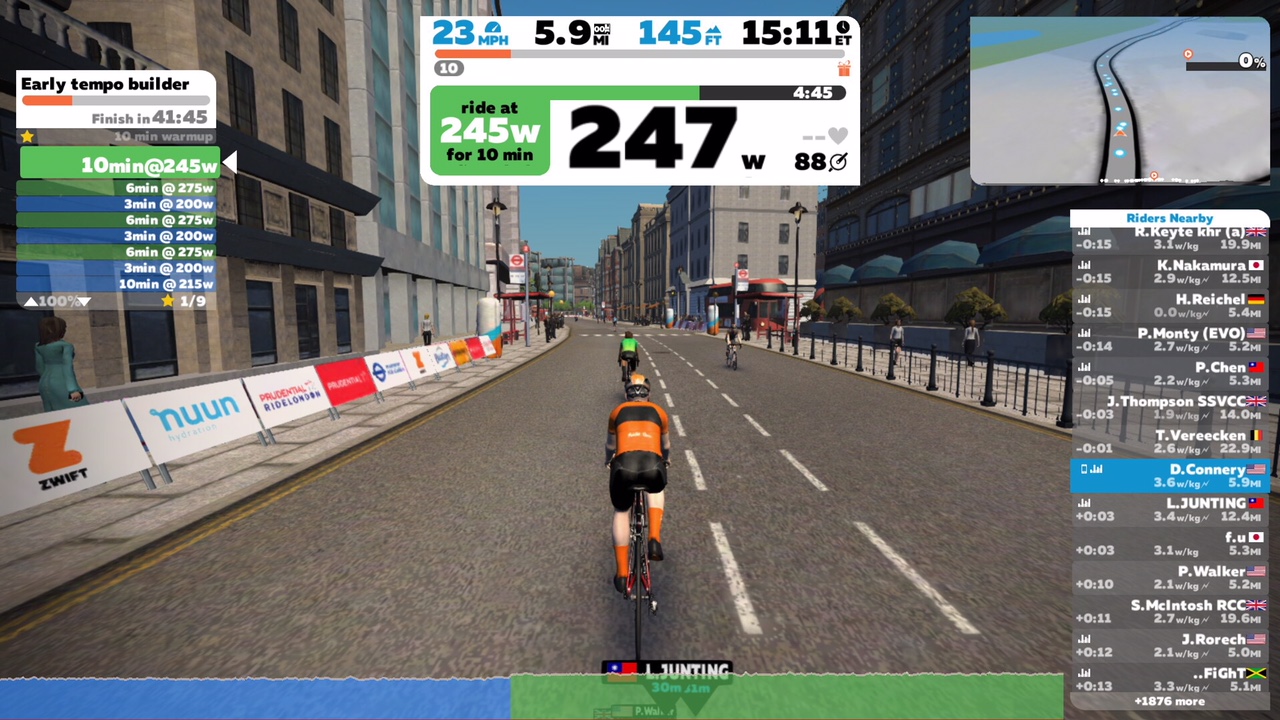
Second option: get a smart trainer and ride at least an hour, at least four times a week, and ride with the pack. Do some events, maybe pick a few workouts out of the Zwift workout list. Try a few things but mostly it’s about being aerobic and getting the legs moving.  As a bonus, pick a weekend day, or another day that works and ride 90-120 minutes.  As a goal, check your weight at the start of the commitment to ride and work to see it come down reliably little by little every few weeks.  Note:  there is a wide spectrum of Zwift users.  I love the Zwift!  I see it as a great tool for riding undulating terrain, and doing workouts where power levels can be held constant.  One of my favorites is when you are set to ride X watts, and you start to daydream or lose focus, and your cadence drops...it ratchets up the resistance and maintains constant power even at a lower cadence.  It does that by increasing the load.  You quickly refocus and get back on the horse!  For performance testing, it is also the measure of consistency that is key.

Third option: get some professional guidance. With a smart trainer or rollers and a power meter, look up a coach and either get some personalized coaching or an online plan from a coach. This will be comprised of efforts that are well tailored to being ready for spring. You will get help analyzing key power metrics which will then guide you through early season development on a path to success. 

While some of these options may be a little bit more than you are ready to commit to, remember the key idea: do something and do it regularly.  Commit to ride 4x a week for two weeks and make it a habit.  It doesn’t have to start with a lot of volume, you just need to do something rather than wring your hands about what you may be missing. 

Aerobic activity will prepare you for the upcoming season and required race efforts. The aerobic efforts will burn calories and get you toward race weight.  Make it simple, or jump in with both feet. You decide.  


Thursday, April 12, 2018

How the race was worn


Every spring I start going outside and I forget, “what do I wear today?”  So after years and years of trying to remember,  I recorded these layers over the past year and made some tweaks. It is so easy to overdress and be miserable. These are geared towards racing, so if training long, maybe consider going one range colder. That way, at lower intensity you can stay warm.  As always, experiment with what works best and customize.  Layers below work best when using Verge clothing.  They make great stuff using modern patterns.  There are two exceptions noted below for very specific garments.  But buy Verge whenever you can!!

Above 65: dry or wet: short sleeves and shorts, base layer. Maybe a vest and arm warmers in the pocket if rain gets cold on descents
55-65: Dry: shorts, SS jersey, base layer and arm warmers, vest in the pocket maybe if you are feeling chilly. 
55-65: Wet: same as above but add light leg warmers if chilly. 
47-55: Dry: jersey, shorts, base layer,  arm and leg warmers, vest, maybe oversocks/shoe covers
47-55: wet: leg warmers, shorts, long sleeve jersey with long sleeve base layer underneath. Vest or jacket
40-47: Dry: leg warmers, shorts, long sleeve jersey with long sleeve base layer underneath. Vest or jacket, booties/shoe covers, maybe buff/gaiter
40-47: wet: arm and leg warmers, long sleeve base layer, LS jersey, jacket, long gloves, thick booties, buff/gaiter
Sub 40 or Rasputitsa: Gabba Jersey LS baselayer, shorts with base layer underneath*, leg warmers, booties, long gloves, buff/gaiter 

*Many years ago, I bought a few pairs of baselayer shorts that were sewn inside out so the seams weren’t against the skin. They were made by Andiamo, and they provide just a little more insulation without bulk. 

Never put on a fleece as an outer layer, as it provides no insulation unless in still air. Still air = no forward motion!  This is actually part of old Polartec marketing. “Provides best insulation relative to bulk in still air” or something like that. In most cases, it would just absorb moisture and make you colder. 

Make things modular if on the bubble. Allow for stuff to be removed if it gets too warm. That’s why leg warmers vs tights are key. Vests that can tuck into a pocket if required.  Look at the weather, especially if you are out for 4 hours starting at dawn.  Temps can change, and the new weather tools can really help identify how things may change.  This is where armwarmers and vests are key.  Manage pockets thinking of this.

Most of all, enjoy.  Conquering the weather makes you feel alive.

Friday, February 2, 2018

Zwifting for fitness


So I just dove into the electronic trainer game full force. I bought a Cycleops Hammer, and took the rear wheel off my bike.  Now before everyone is all like “trainer riding is lame, ride outdoors!” I give you exhibits 1 and 2: it’s -6 F out and my kids have activities at every moment of every day. Riding in the AM on rollers for me has been the way I get things done for a long time during winter. I have been training with power for about 17 years and have been used to that feedback, augmented by metrics in TrainingPeaks. 

But electronic trainers and Zwift etc are a pretty cool development. And it isn’t that you can ride through a virtual world and have the resistance change while going uphill. (Believe me, it’s only been a month and if I see that climb to the top of the cable car once more...I might lose it).  Rather, putting workouts into Zwift and having the software control the power output in erg mode is where the real benefit lies.  You can connect your TrainingPeaks account and it’s designed workouts with Zwift. If your coach assigns warmups, tempo, warmdown etc in a workout, “erg” mode in Zwift allows you to have the power controlled. 

I have ridden long tempo blocks and held a reasonably consistent average power. I have watched my Power/HR metric and felt good that it was staying below 5%. But Zwifting a long tempo block is another level of difficulty.  When it says: Ride “X” Watts for 20 minutes, it doesn’t know you tire at the end of the set. And since power is proportional to torque, and torque is affected by  cadence, when you get tired or lose focus and drop cadence, the electronic trainer ups the resistance to increase torque and keep power constant.  This is motivating because if the resistance gets too high...you are grinding it out at low revs!  Watching a power number and keep it roughly at the average yourself is not the same as a machine constantly making it exactly obvious that you will ride “X” Watts and that only. 

So this is where the real benefit of winter training on electronic trainers becomes so much better for getting you fit. When you are pushed to complete sets on target and to the end, you build muscle endurance and increase conditioning. The intensity of the set further drives this home. Riding 10 min at threshold there is more opportunity to fade vs 49 min at aerobic or easy pace. 

Mixing this strength work up with regular roller rides at lower intensities as well as open rides on Zwift where you can ride with others and sometimes race them is a good diversion. And always, there is the 4th and 5th options: riding on the road when it’s safe and fat biking the local trails. 

Thursday, October 19, 2017

Sometimes everything goes wrong...almost

Not everything is easy...or definite.

Photo credit: Kurt Maw
When I was younger, and a Cat 4, I read an article from my coach about planning for the day of the race.  What to prepare, when to leave, how much time to allow, etc.  I still follow that roughly to this day.  One of the key bits of this is arriving at the race and not being [too] stressed out.

When you are late, it seems like everything goes wrong.  But if you are repeatedly early and on time, you develop a muscle memory for what to do before the race and you know what to expect. This routine becomes tested when life throws you a curve and you have to adapt based on the time left. 

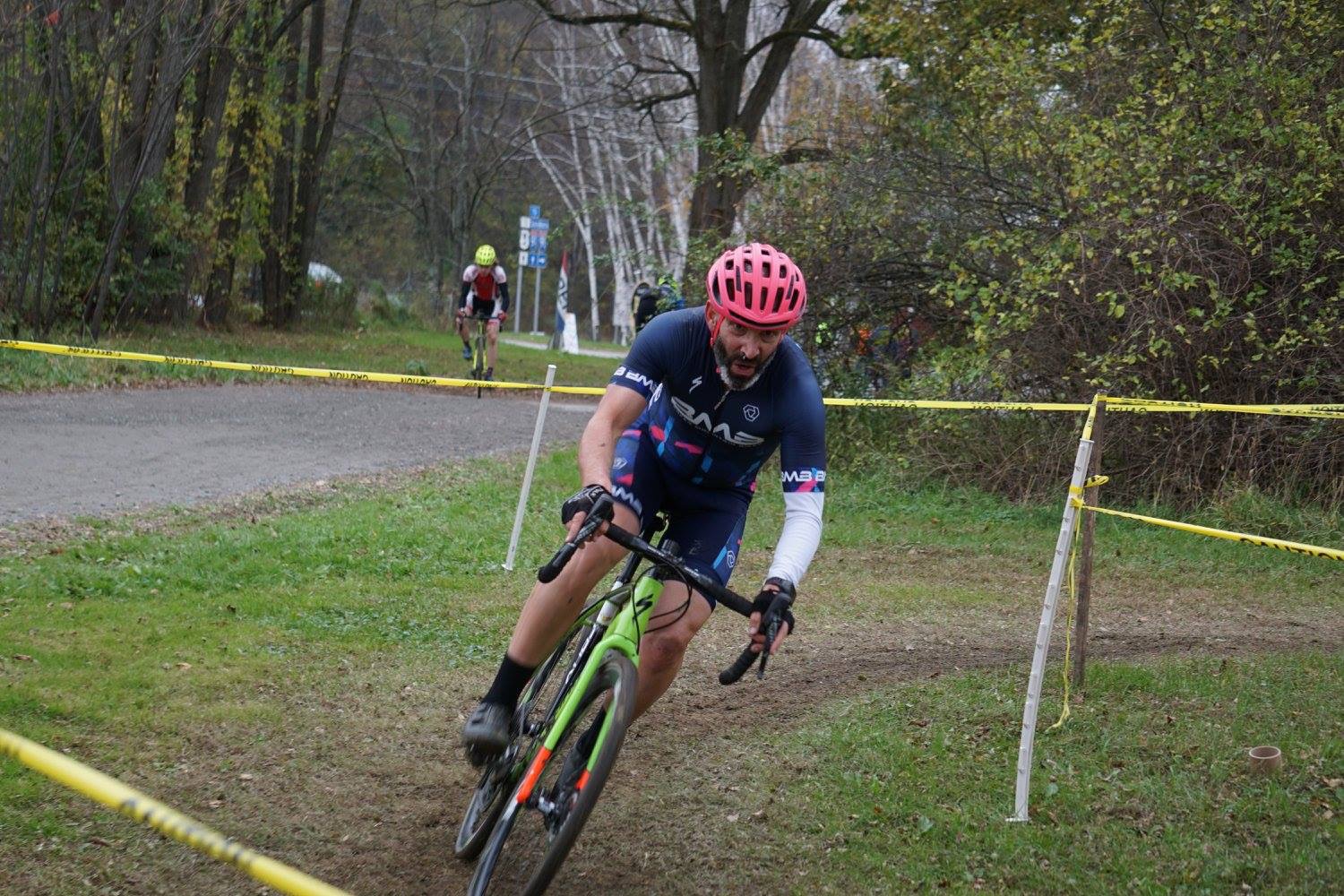
Like when you arrive 40 minutes before the start of a cross race.  So what do you do?  Evaluate the nice to haves and need to haves.  First of all, you won't arrive at the race magically late.  On the way, relax and do a mental checklist.  Then...well, you need a number, and you probably need to visit the porta-john.  You need to have your kit on and you need that number on your kit.  Don’t fuss with warmup and race clothes, just put on the race kit.  Then, when you are done with that, you probably have 20 minutes to go.  So, pull out the race bike, evaluate the course, put in the right tire pressure and go.  No pit bike, no pit wheels.  Just go.

Ride to the start, maybe ride to the start as fast as you can to get some blood pumping.  Evaluate staging and then ride the start so you don’t take the whole field out going left when you should go right.  Come back to the start and be there before they start staging.  And so it is done.

At this point, you are probably thinking “no warmup, ugh!!” but you have one bit on your side: Adrenaline.  This cagey chemical in the body is helpful and hurtful.  But in this case, it’s getting you ready for the whole ordeal because deep down you are nervous and scared.  Both things that excite the adrenal glands.  Vocalize to yourself that you’re nervous and then relax and give it your best.  One thing that will happen is that the first lap will feel horrible because you aren’t fully opened up.  So be patient, and let that happen.  On the second and third laps you will begin to feel better and start hunting folks down.
Photo credit: Benjamin D Bloom Photography

This happened to me this past weekend, and a guy next to me that I’ve known for a long time said “Eh, whatever.  You have no expectations, you will probably just relax and have the best race.  It’s not like you are late all the time, then it would be a problem”.  It wasn’t the best race, but what it wasn’t was my worst.  I got 5th with a late surge.  Sometimes you get thrown a curve, and you have to wait on it, adjust and get to the line.  Once on the line, hit it with what you have.  Yes a perfect warmup would have been nice, but you are here to race, so practice racing.

Monday, September 18, 2017

The Wednesday Night Training Race....

Why you should really do that training series

When I was younger, racing as a Killer B in CX, for some reason, I thought it was ridiculous to race the Wednesday night CX training race.  I have no idea why.  Perhaps I thought it was not enough training volume.  Perhaps I wanted to do some “quality training” or “key workouts”.  But, in reality, that’s not correct at all.

The Wednesday night series that seems to be almost everywhere: Catamount, Fifth Street, Wednesday Night SuperPrestige, or Wednesday Night Worlds at Alpenrose.  These are fields of varying ability with one goal: 40-60 minutes of drilling it cross style.  When you are done, you have done some quality training.  What else?  You have practiced the age old skill of turning without falling while riding on the rivet.  There is no doubt, when it’s a race or practice race, your psyche knows and puts the game face on.  Things are tougher and you can utilize this as a chance to try things. What you ask?

The Start
Let’s begin at the beginning.  Line up roughly where you would for a Saturday race.  Listen for the whistle and concentrate on clipping in and getting going.  Did you choose the right gear?  Did you go hard enough for too long or not long enough?  Evaluate the start terrain and make decisions: “Do I need to be in the top 5 before that corner”.
The settle
How far do you hammer to get off the line?  The start is a sprint, and you go into a pretty significant debt.  But it takes much longer to recover the longer you sprint.  Evaluate how far you go before you settle into the pace of the race.  There is usually a sprint, a tussle to get with the group, and then a settle to a pace you can maintain.  Push the envelope and see what the results are.
Changing lines
Perhaps early in the race you see someone ahead taking a different line and it seems faster.  Try that next time.  See if it can help you through a corner.  Also, concentrate on looking through the corner and not at the post at the exit of the corner.
No left hand
The front brake can be the death of you.  Applying it in a corner basically makes you lose a little cornering traction and increases the odds of crashing or sliding out by 709%.  Why do you hit the front brake?  Because you are coming in at what feels like a pace that is too hot.  How do you fix this?  I practice a philosophy that my co-worker Bryan preaches: Slow is Smooth, and Smooth is Fast.  Next time through a hot corner, approach it slower, physically remove the left hand from the brake lever, but keep the right one in the brake position.  Tweak the speed you enter this, and play around with finding a hot smooth line by starting slower.  You’ll also give yourself a chance to recover with this technique and as soon as the power section opens up, you’ll be able hit it harder.
Take a break
There are no crossresults points on Wednesday.  So after you dig too hard on the first lap, sprint too hard out of a smooth section, ride a lap a notch down.  Then re-enter the scrum and hit it again.  Sometimes hammering all the time is good, and sometimes, you don’t get enough of a clear view of the trail because you are hammering.  Taking a break lets you bring the heart rate down, and look at some features at a slower speed, and then attack them on the next lap.  Also, coming off of a recovery lap, practice closing a gap to someone as if it was a real race.  What if that racer up ahead is the $12 zone??  Practice closing because it’s hard.  And don’t worry about people who are going to be pumped that they beat you.  There’s no points.  And there’s no harm in looking at the long game: Saturday and Sunday.

In closing

So, in short, there are so many benefits to the weekday race.  You can practice so much technique in a real atmosphere and make improvements before race day.  And who knows, maybe you’ll even get a brat and a beer in the parking lot. 

Wednesday, November 9, 2016

Day of Race Routine for Cross


Day of race routine. Getting to a CX race and getting organized

Getting to a CX race and getting organized is key to a successful venture. I have been using the same routine for the past few years and it works well for me. Perhaps sharing this will help you get ready as well. 

Time the food and arrive early
I like to arrive so that I can get there and ride the course casually right away. This means, arriving before the race three before you is over. Get there and get your pit bike out and get changed into non-race kit.  Put in the required pressure and go to the start/finish. Once the winner goes through, begin riding the course slowly observing tricky spots and opportunities. You should be able to slowly get in 2 laps, being careful not to foul racers completing ahead of you, and not run afoul of the officials by riding the finish straight. 

Once done, head over to reg and get your number.  By now, your are less than 2 hours to race time. The race meal should be already eaten. I like to eat my breakfast 3 hours before which is usually oats with walnuts, blueberries, maple and butter. Sometimes a yogurt too. Always drinking water to supplement.  In the final 2 hours I like to top off with either a banana, a partial Clif Bar, or an Gojo applesauce packet if I get hungry. 

Warmup
Once back at the car, PIN numbers on the race kit and start a warmup. The actual warmup is the subject of another article. But this should be about 1:40 before the race now. Do a structured 20-30 min warmup, and be ready to go back onto the course for 2 hotlaps as the race 2 before you finishes.  Identify areas of the course that you need to concentrate on and consider tire choice and pressure. 

The final hour 
Once this final course inspection is done, things are getting compressed. Get back to the car, get both bikes ready or get the pit wheels ready. Change into race kit and do a some warmup work to stay loose. With warmups on, a bottle in a pocket, and  your espresso and untapped maple in the other pocket, bring pit bike/wheels to the pit at 30 min to go. Find an area near the start to stay loose and get ready for callups.  Sometimes I will ride slowly or jog a few 50m strides in my riding shoes on the grass. Yes, I said jog.

With 15 min to go, take the espresso and untapped and get ready for call ups. Keep the warmups on and hang them on the start fence at 5-10 min to go. 

Go time
The hope here is that you will have a sequence of events, planned with enough time, to get optimally ready with the most self reliance. It is always great to have pit help and jacket handlers, and when they arrive, it's a bonus. If they aren't around, be ready to help yourself with this guide. 

Nothing ever works perfectly. However, concentrate on the key tasks at hand and be ready for curve balls. The number one thing is to be on the line ready to start. Warmups can vary and food may be forgotten. But keep an open mind and be positive, and you too can be charging to the front effectively when the whistle blows. 

Sunday, February 28, 2016

Time efficiency -- Make your lunch

Make your lunch

One of the key factors of good training regimen is eating right. Consistent nutrition is a building block that will help you every step of the way.   I am a huge fan of eating real food as part of training. This is important to me off the bike as well. 

One of the best things you can do to control your diet and eat well is make your own lunch. It has so many benefits. One, you save time overall. It may take a little time to make in the morning and you then have to get it to work, but it pays off. It takes me 5-10 min to make lunch snacks for the day. It rarely takes me 5-10 to go get lunch. What do you do with that time?  Eat at your desk or go for a quick run and eat at your desk after. Two, you eat way healthier than food you can get out in most cases. Pack things with a minimum of ingredients: almonds, carrots, Greek yogurt, apples, bananas, oranges. For a sandwich, I usually just eat a PB&J on wheat bread. But it is just as easy to grill some chicken one night, and then slice that up for a few sandwiches. Make a wrap with avocados or other veggies.  

Making your own lunch is so key to a healthy race weight and feeling great, try this challenge.  If you eat a little less than healthy for lunch (giant burritos, burgers, meatball subs) commit to making lunch for 5-7 days. Just try it. Then, on the next day, go get your old lunch. Note how your stomach feels at 2:00 and how you feel.  I guarantee making a healthy lunch with a minimum of preservatives will make you feel better. 

Not every situation at work works. But if you can some or all of this into your day, you can get some extra miles in, feel better, and be on the way to being a better athlete at any sport. 

Openwater swimming for your first triathlon

OMG!!  The Swim!

For any new triathlete, the swim is without a doubt the hardest hurdle to overcome if you haven't come from a competitive swimmer background. There is no doubt an advantage to having years of laps in a pool and swimming races when you line up in open water. But, being a non-kid swimmer myself, sometimes these expert swimmers don't quite understand what anxiety this leg brings to a non-fish.  Having panicked HARD in my two first races I developed a plan to try and overcome. 

One, plan to buy a wetsuit. The buoyancy you get from this is measurable. The first time you get one and go into the water, you will feel like you are popping out up to your chest like a channel buoy.  You can get a decent sleeveless wetsuit for $99-$150 that is cheap insurance.  Not only does it help you float, and keep you warm, it helps you swim a little bit faster too!

Two, on race day, get into the water before the race and get your face wet. Acclimating to the water temp is very helpful to overcoming the initial shock of getting into the water for a scrum with 50-100 friends.  Also, during acclimation, pull on your suit to make it as comfortable as possible on your chest. I find that in putting on the suit sometimes, it doesn't come up my legs enough and the arm straps are pulling down too tightly. Pull up on the crotch of the suit to get more of it up into the upper body and relieve this pressure. If you can't  get into the water before the race, wade in at your start slowly and take a few seconds before starting. 

Three, don't fight the crowd. If the first turn is a left, line up on the right side and slowly start off. Lining up with the crowd only lends to increasing anxiety as you bump and collide with other swimmers. Quick geometry says that you are adding only a minimum of meters by doing this. Racing in calmer waters will help you relax and get into a rhythm. In most cases, things will bunch again at the first turn if it is in the first few minutes if the swim and then string out.  Some races offer streaming starts where 3 people start every 10-20 seconds. This is an amazing development for new racers. Check this out if you need it. 

Four, be as fit as you can. Swimming 2-3 times a week is the best way to get fit for a minimum of time. If you are just starting, swim a portion of the race distance for a few weeks and then work your way up. Your first triathlon should be a sprint or Olympic distance. That way, you are swimming 500-1500 yards in the race. When starting, if you haven't been swimming in a while, swim as many laps as you can consecutively, and then take a 30-60 sec break.  In the race, this could be simulated with swimming freestyle a bit and then popping up for a few seconds of breaststroke to get your bearings and breathe if required.  

One thing the start of a race brings on is panic in many. Being out of breath compounds this. After swimming for a few weeks, integrate what I call a start drill into your workout. After a warmup of 200-500 yards, do the following:
2x50 yard sprint with 5 sec rest after each
2x100 yard swim at your pace with 15 sec rest after each
Repeat this 2-4 times
This workout gets you breathing hard, and then you have to turn right around and swim a consistent 100yd while managing your breathing. The first 100 in each set is what I have found best simulates open water starting. This ability to swim and manage breathing will give you confidence when you have that feeling in a race. 

Hopefully you can put these few things together to help your first swim. Triathlon is a great sport that requires a lot of skills that produce great overall body fitness. Completing your first open water race will also give you the confidence and mental toughness that will help in many other situations in life.

Dave Connery is a USA Triathlon Certified Coach, Masters/Age Group Racer, and father of two kids.  H-factor Training is a business that works with real world athletes trying to balance their activities with their work and family at any level.